Saturday, 2 October 2021

Show Me the Money


Bank, Business, Cash, Coin, British, Stack, Deposit

The Society of Authors has provided some excellent online talks during the pandemic. I actually signed up for Show Me the Money – and forgot to attend. However, I’ve watched it in the last week and it has given me some food for thought. The only snag about watching it retrospectively is that you can’t get to see what was in the chat box.  

Candy Gourlay, a children’s writer and fellow SCBWI member, chaired a panel with Shoo Rayner and Steve Antony, author illustrators.  They discussed side hustles that we writers can do to supplement our income and some marketing strategies.   

A lot of what they spoke about was very familiar. Rounding off the topic they concluded that in order to earn a living from writing you have to write according to what the market wants rather than just have the wonderful idea that you think everybody should read. And you need to make that visible. You have to change your mind-set.

Now, I’ve always told my creative writing students that once the writing is done you have to switch personality from being the introspective writer beavering away in their garret to taking on the mores of car salesman and marketing aggressively. My own routine reflects this: mornings are for my own writing.  Then once I’ve tackled CafeLit and my 300 or so emails, I spend the rest of the day marketing, my own and other people’s work,  –often until about 9.30 p.m.  

I guess I’ve been fortunate in working for eleven years in a day job that recognised me as a writer and though there was some pressure about being excellent  - not sure whether I achieved that though they never sacked me – but there wasn’t so much commercial pressure. In fact niche was appreciated.  CafeLit and the Creative CafĂ© Project came out of that job. I also wrote the first of my Schellberg books as the result of a sabbatical.    


We value niche in what we publish. We never put pressure on people to market but always appreciate any what you do.  


However, marketing needn’t be seen as the enemy. Learn to enjoy it. Find the strategies that work best that are also palatable to you and replicate those. That is the philosophy behind the book tweaks published every month.

Saturday, 25 September 2021

Visitng a previous publication


This truly is an extraordinary product. Super stories that take you to other worlds. We are very proud to have this as one of our single author collections. 

Read  more abut it here


Friday, 24 September 2021

Talks offered:


This book is a compilation of the winning entries of the Waterloo Festival's Writing Competitions of 2018, 2019 and 2020.    

What does it take to win in a competition?

How can you craft a compelling short story? 

How can you interpret a theme?


How would you like a workshop for your writers' group?  

Free:  

  • if you are within a twenty mile radius of BL9 
  • you have evidence of having bought and read the book
  • if you are further afield, on Zoom.

Us the contact form to get in touch

Buy the book here.        


Tuesday, 21 September 2021

Communicating with your publisher and editor


Tin Can, Speak, Talk, Microphone, Can

We’re not unusual in putting our writers through three stages of editing and their texts a further three proof-reads. I go into more detail about this elsewhere. To summarize:

  • Edit 1 is a sort of global edit, picking up structural faults, inconsistencies in characters and also a writer’s common faults etc..
  • Edit 2 is getting closer to the text, challenging clichĂ©s, awkward phrasing, instances of telling where showing would be better, purple prose, making sure dialogue rings true etc..
  • Edit 3 is checking for typos, grammatical awkwardness etc..


Then we have the three proof reads.


It’s really important that you don’t keep sending material to your editor between edits. You then get into problems of version control. You have to be careful as well that you are not undoing what has already been established.


Proof reads are even more critical. You really should only pick up on typos, formatting mistakes and spelling mistakes that have been missed in other edits or proof reads. This isn’t the time for altering structure, adding in extra material or altering the basic text in any way.


When you communicate with your editor or someone else within the publish company, it’s a good idea to have the name of your editor, the title of your book and your name in the subject line. You might even add a word about what you wish to discuss. And please change the topic in the email header if you’re changing the topic in the email.


Please take the time to craft any email carefully. Please don’t send three or four in a row adding a little extra detail each time. We are dealing with several writers at any one time and we have contact with over 400. We receive about 200 emails a day.


Please be patient. Le t everything take its course as outlined on your contract. Please don’t start talking about launches etc until we raise it. Wait until we can have a proper discussion about the cover before you start sending ideas to us. And note, not every publisher will involve you in that process. We’re just generous that way.


We have a particular way of writing blurbs. You can have some input into this but please discuss it with your editor.


We know you’re getting very excited about your book – we are too, believe it or not, but everything must take its course. Please let us get on with that.                 


Tuesday, 7 September 2021

The Jinn


The Jinn

How we came to publish this one


All of the stories about the Jinn were first published on CafĂ©Lit so this is another of our serials. Mason Bushell has other stories on CafeLit and he is a regular writer of stories. He has a firm writing routine.  


The title

It really is simple and to the point.

Some notes about the process

The editing process here is slightly different from the one we use in our other anthologies. Every CafĂ©Lit story is given a light copy edit before it is published in the  e-zine. For serials like this we then put together a camera ready proof for the writer to check. We do an in-house technical proof and after the author has returned their proofs we get another proof read by an editor who has not seen the text before. 


The cover

The cover image was created by Ashleigh James. It complements well some of the other covers we have for CafeLit serials. The front cover picture really says what it is all about. A jinn is a magical creature. The picture shows that this is a quirky version.   


Some notes about style

These stories are very quirky. Very importantly in CafĂ©Lit serials each episode must stand alone and there should be an overarching story as well. This happens beautifully here.     

Who we think the reader is

These stories are for people who like to laugh.

‘This collection of stories about the Jinn and the various situations he finds himself in when summoned is a light easy read.

Mason Bushell has created an amusing little character in the Jinn and you can't help but smile at his antics & the way he expresses himself.

If you are looking for a quick fast read that will leave you with a smile, give it a read.’ Says one reviewer.


What else

Why not give Mason a follow? He’s written some super stories.


Review copies

It’s always great if you can buy the book, or download it if you have a plan, and give us a review. Just click on the link to be taken to our online bookshop. If you would like to review and you are strapped for cash, just get in touch for a free review copy.         

See in our bookstore.  


Thursday, 26 August 2021

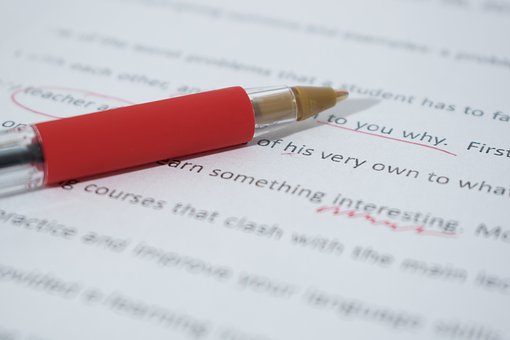
Our editing process

 Correcting, Proof, Paper, Correction

For our imprints Bridge House, Chapeltown and The RedTelephone, we use a particular editing process.

Edit 1

An editor will read the script very much as a reader would. However, with their editing hat on they will be looking for plot holes, character inconsistencies, lack of cause and effect and also for any persistent grammatical, spelling or formatting mistakes you make.

At this point the text will not be heavily annotated. Where there are annotations, the editor will use the Comments function on Track Changes. You may be supplied with notes at the end of chapters / stories and you will also be given an overall report.

You are then invited to revisit your text. How much needs to be done will vary from writer to writer. If we’re publishing a volume of short stories, many of which have been published before, there will be little to do. Often for a whole novel this will be the biggest edit and will take the most of amount of time of all the edits.


Edit 2

There will be many more annotation this time and the editor will use the Comments function of Track Changes. You are asked to respond to the comment but leave the comment visible on the text. Always these are just suggestions. The writer is also invited to comment on the comments  

This will include flagging up repetitions, clichés, award language, missing section breaks, instances of telling where showing would do better etc. If at this stage the editor notices the odd punctuation, grammatical or spelling mistake, they will just correct it.


Edit 3

Here we use full Track Changes. This is where the editor just changes what isn’t working. This will include correcting typos, awkward language, punctuation and  spelling mistakes and may even include alterations that the writer has not managed to make. This is sent back to the author to check. We recommend reading it without  the changes showing and only switch them on if something doesn’t seem right. In which case, reject that change. At the end of the read through, the author accepts all the changes. There may be a little toing and froing until both parties are happy. Often though, there is just one exchange.


Technical proof read

This is done by the design team and is computer assisted. This checks for extra double spaces, consistent spelling of words that have optional spellings, consistency of speech marks etc. .  


Proof 1

The text is now made into a camera-ready PDF for the author to check. The most common issue that comes up here is the correctness of section breaks. Your wysiwyg text may say something different from what the coding that is within the text tells us. The author is invited to list any change that are needed or put sticky notes on to the PDF. If there are issues with what you suggest we contact you. If we have an issue with anything you suggest, we get back to you.  


Proof 2

After the author’s changes have been made we pass the text on to a proof-reader. We have been using a different editor from the one that did the original edit but we are revising this as some texts with strong voices or quirkier styles- and many of our texts are like this – use a slightly different type of language. If we have an issue with anything the proof reader suggests, we get back to you and to them. .  


Then the book goes to print.     

Monday, 23 August 2021

Publisher talks at the Last Chance Salon


The Last Chance Salon - see in our online bookshop


This book is  a little different from many of our others. These are all short stories but they interconnect. We also often publish themed anthologies. It's; fun to write in this way, with everyone concentrating on a central theme.       

Would you like a workshop for your writing group? We can also give some insight into how we work as publishers. 

Use the contact form to get in touch.